Creation Care: Pollinator-Friendly Gardens
Roland and Rachel from the Creation Care team share their tips for a successful pollinator garden.
Supporting pollinators, especially declining bee populations, is vital. We include flowering plants throughout the year so insects always have access to nectar. Here are a few suggestions of plants we have in our garden that perhaps you could include in yours? The RHS website HERE gives lots of helpful suggestions too.
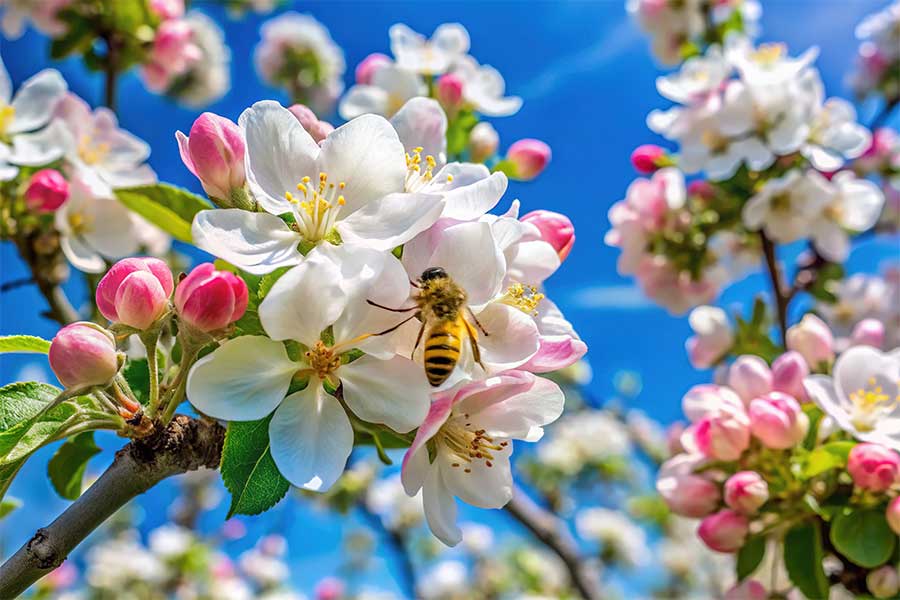
Spring flowering bulbs: daffodils, crocus, grape hyacinths and species (native) tulips. Spring blossoms on fruit trees and bushes like apples and blueberries
Summer flowering plants: roses, lavender, marigolds, sunflowers, cosmos, salvia, buddleja, allium and herbs like oregano and sage
Autumn flowering plants: sedum, aster, anemones, rudbeckia and echinacea
Winter flowering bushes and flowers: winter flowering clematis, viburnum, mahonia, sarcococca (Christmas Box) and hellebores
Tips for a successful pollinator garden:
Prioritise native plants: They are best suited to local pollinators.
Choose single flowers: Flowers with single rings of petals (like daisies) make it easier to reach nectar than double-petaled varieties.
Ensure succession planting: Choose plants that bloom in sequence through the year.
Avoid pesticides: Chemicals can be toxic to bees and butterflies.
Allow lawn ‘weeds’ to flower by mowing less often. Dandelions, for instance, are an invaluable food source for many pollinators.
Provide water for pollinators. Fill a small, shallow bowl with water or include a bird bath.
Provide nest sites for wild bees. Who doesn’t like a bee hotel? Can it be just a log with holes drilled in it?
If you do not have a garden or prefer not to garden, even a few pots on a doorstep or a window box with flowers can attract and support pollinating insects. Please share your experience and tips! alistairjoannahardie@gmail.com
Dorset Council have a page on Facebook and X with lots more eco tips and info - if you have a social media account just search for them.